A Kitchen That Feels Easier to Live In
A beautifully organized kitchen isn’t about making every cabinet look perfect. The best kitchen organization ideas make the space easier to use—so you can find what you need, prepare meals with less frustration, and keep everyday clutter under control.
Whether you have a spacious kitchen or a small apartment setup, simple changes can make a surprisingly big difference. Creating dedicated zones, making better use of vertical space, and keeping frequently used items within easy reach can transform how your kitchen functions without requiring a major renovation.
These 12 practical ideas focus on organization that works in real life—not just kitchens that look beautiful in photographs.
Quick Take
If you don’t want to reorganize your entire kitchen at once, start with these three changes:
✔ Clear one countertop and keep only the items you use regularly
✔ Create dedicated zones for cooking, meal prep, coffee, and food storage
✔ Organize one high-frustration area first, such as your pantry, spice cabinet, or utensil drawer
Small improvements are easier to maintain and can quickly make the entire kitchen feel calmer.
Table of Contents
- Create Zones Based on How You Cook
- Use Clear Containers for Pantry Staples
- Organize Drawers with Dividers
- Take Advantage of Vertical Cabinet Space
- Give Your Spices a Dedicated Home
- Simplify the Area Under the Sink
- Keep Countertops Purposefully Clear
- Create Refrigerator Zones
- Use the Inside of Cabinet Doors
- Build a Simple Baking Station
- Create a Coffee or Beverage Station
- Start a 10-Minute Weekly Kitchen Reset
1. Create Zones Based on How You Cook
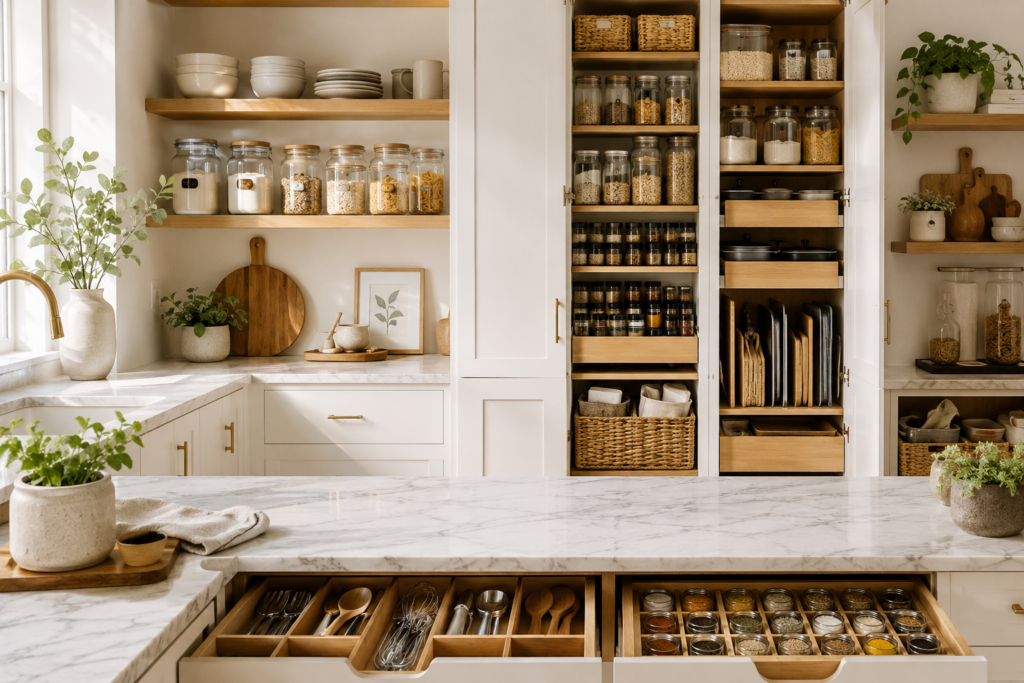
Instead of organizing your kitchen only by where things happen to fit, organize it around the way you actually use the space.
Create simple zones for activities such as meal preparation, cooking, baking, coffee, food storage, and cleanup. Keep the items needed for each activity close together. For example, cutting boards, knives, mixing bowls, and frequently used seasonings can stay near your main prep area.
This reduces unnecessary movement around the kitchen and makes everyday routines feel much more intuitive.
Make It Work
Start by noticing which items you repeatedly walk across the kitchen to retrieve. Moving those items closer to where they’re actually used is one of the easiest organization improvements you can make.
DaSora Tip
Don’t organize around an imaginary perfect kitchen. Organize around your real habits.
Simplifying what you own can make organization even easier. See our guide to 10 Essential Kitchen Tools We’d Actually Use Every Day for practical tools worth keeping within reach.
2. Use Clear Containers for Pantry Staples
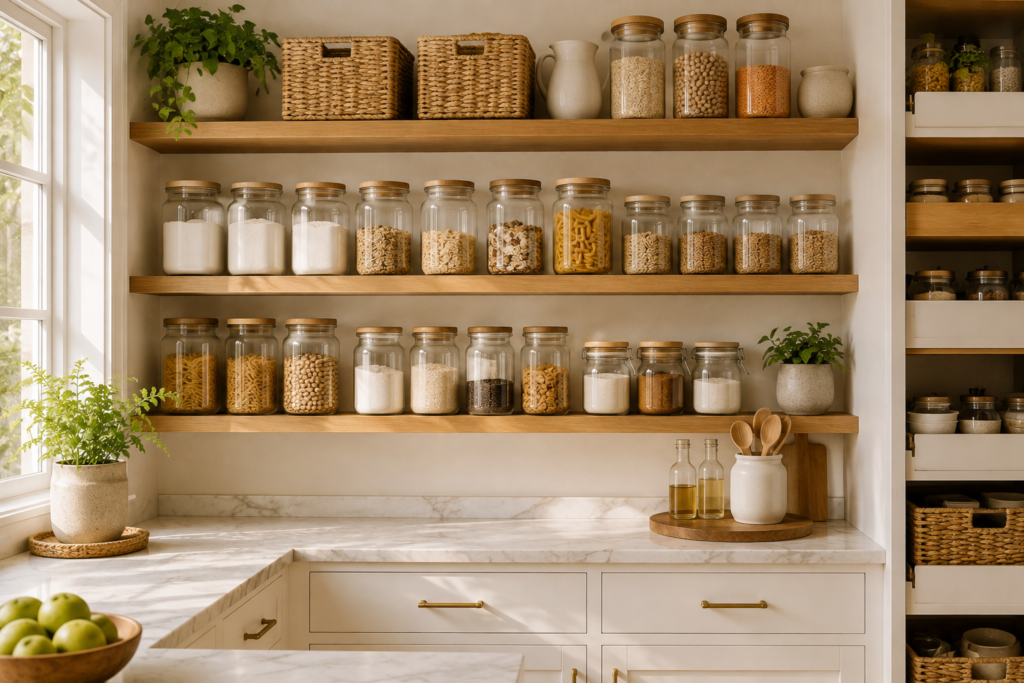
A pantry becomes much easier to manage when you can quickly see what you already have. Clear containers work especially well for frequently used staples such as rice, pasta, oats, flour, cereal, and baking ingredients.
They can also reduce half-empty packages and make shelves feel more orderly. You don’t need to transfer everything into matching containers, though. Focus on the foods you use often and the packages that tend to create clutter.
Make It Work
Group similar foods together before buying containers. Measure your shelves, choose stackable sizes when possible, and leave enough room to remove each container comfortably.
DaSora Tip
Don’t organize your pantry just for appearance. Visibility and easy access matter more than perfectly matching containers.
3. Organize Drawers with Dividers
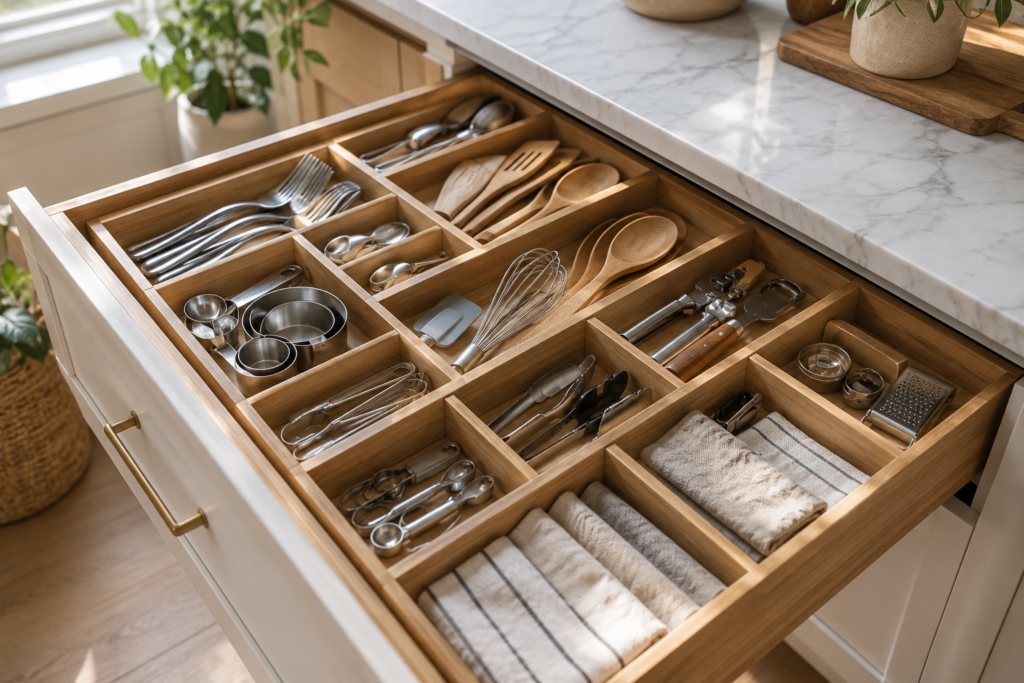
Kitchen drawers can quickly become frustrating when utensils, measuring tools, gadgets, and miscellaneous items are mixed together. Simple drawer dividers give everything a defined place and make it easier to put items away after cooking.
Start with the drawer you use most often. Remove everything, eliminate duplicates or items you rarely use, and group what’s left by purpose. Everyday utensils should be easiest to reach, while occasional tools can move to a less convenient drawer.
Make It Work
Adjustable dividers are useful because they can adapt as your needs change. Before purchasing organizers, measure the inside dimensions of the drawer—including its height.
DaSora Tip
Leave a little empty space. A drawer that is completely full is usually harder to keep organized.
4. Take Advantage of Vertical Cabinet Space
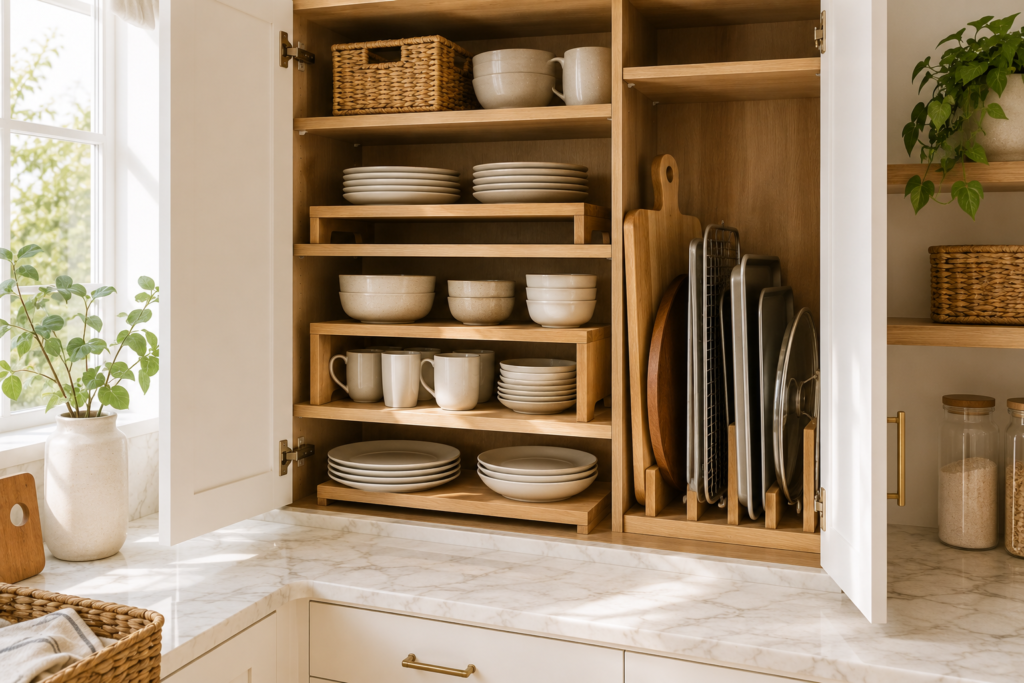
One of the most overlooked kitchen organization ideas is using the empty space between shelves.
Shelf risers can create a second level for plates, bowls, mugs, or pantry items. Stackable bins can make tall cabinets easier to use, while vertical organizers work well for cutting boards, baking sheets, trays, and pan lids.
Using cabinet height efficiently can increase usable storage without adding another cabinet or taking up countertop space.
Make It Work
Look inside each cabinet for unused vertical space before buying organizers. Add storage only where it solves a specific problem.
DaSora Tip
Think upward before thinking outward. Making better use of existing cabinet height can prevent unnecessary countertop storage.
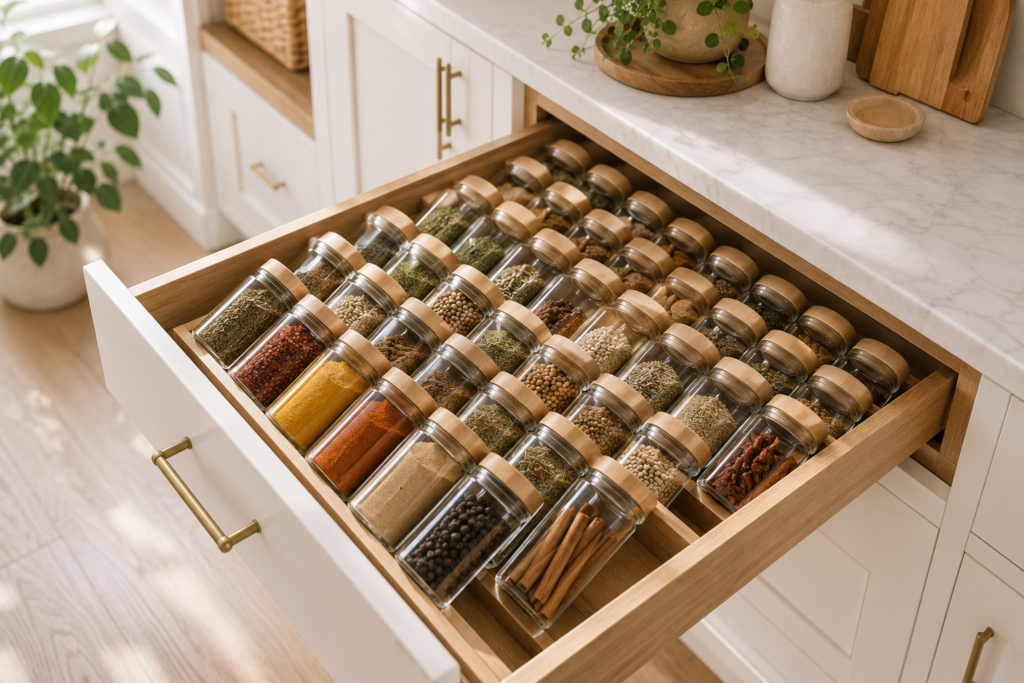
5. Give Your Spices a Dedicated Home
Spices are much easier to use when you can see their labels without moving several jars first. Depending on your kitchen, a shallow drawer, tiered cabinet organizer, pull-out rack, or compact shelf can all work well.
Keep frequently used seasonings together and move duplicates or rarely used spices elsewhere. An organized spice area also makes it easier to notice what you’re running low on before starting a recipe.
Make It Work
Arrange spices alphabetically or group them by how you cook—such as everyday seasonings, baking spices, and specialty blends. Choose whichever system feels easiest to maintain.
DaSora Tip
Before buying a spice organizer, organize the spices themselves first. You may discover expired jars, duplicates, or seasonings you no longer use.
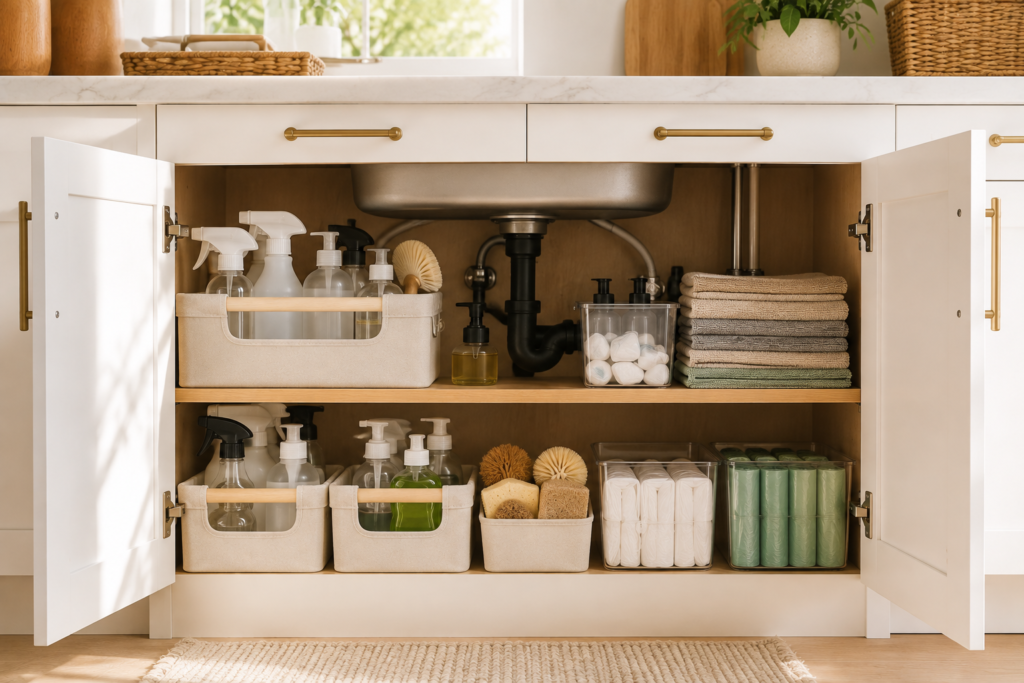
6. Simplify the Area Under the Sink
The cabinet under the kitchen sink often becomes a catch-all for cleaning sprays, dishwasher supplies, sponges, trash bags, and miscellaneous household products. A simple organization system can turn this awkward space into useful storage.
Start by removing everything and discarding empty bottles or products you no longer use. Group similar supplies together so everyday cleaning products, dishwasher essentials, and backup items each have their own place.
Make It Work
Use small bins or handled caddies to keep similar products together. A portable caddy is especially useful because you can grab the supplies you need and return everything to one place when you’re finished.
Before adding shelves or organizers, remember to leave enough clearance around plumbing and disposal components.
DaSora Tip
Keep the products you use most often toward the front. Backup supplies can stay farther back or in a separate storage area.
7. Keep Countertops Purposefully Clear
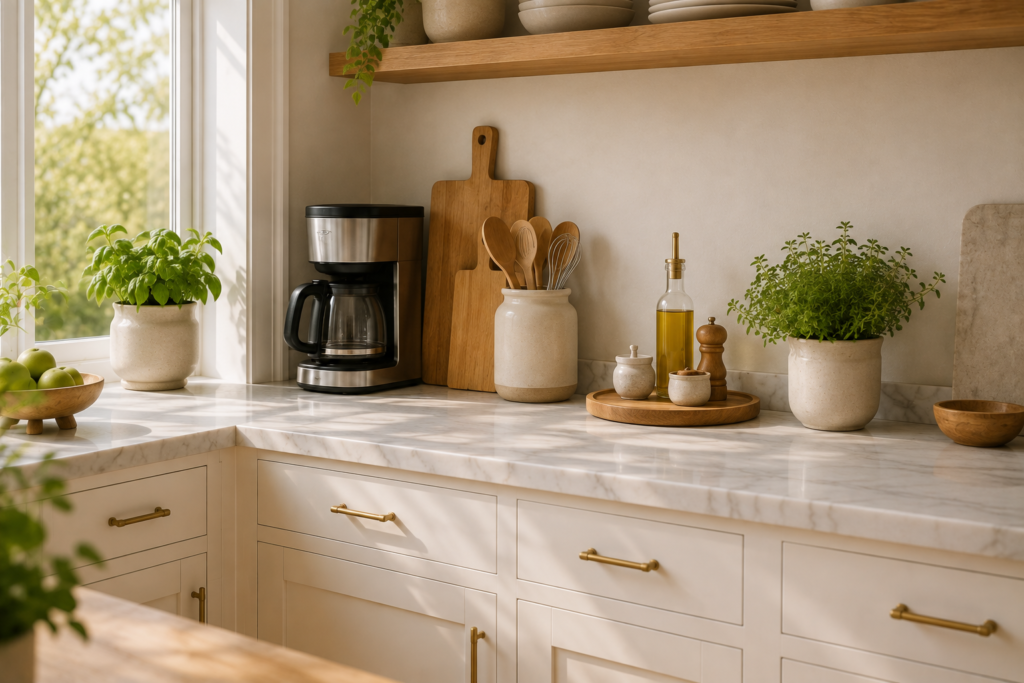
Clear countertops can instantly make a kitchen feel calmer, larger, and easier to clean. But that doesn’t mean everything needs to disappear behind cabinet doors.
The goal is to give countertop space a purpose.
Keep appliances and tools on display only when you use them frequently. A coffee maker used every morning probably deserves countertop space. A specialty appliance used twice a year probably doesn’t.
Small trays can also help visually group items such as cooking oils, salt, pepper, or coffee supplies so they feel intentional rather than scattered.
Make It Work
Remove everything from one section of countertop and add items back one at a time. Ask yourself whether each item genuinely needs to remain within reach.
DaSora Tip
Don’t aim for an empty kitchen. Aim for a kitchen where everything on the countertop earns its place.
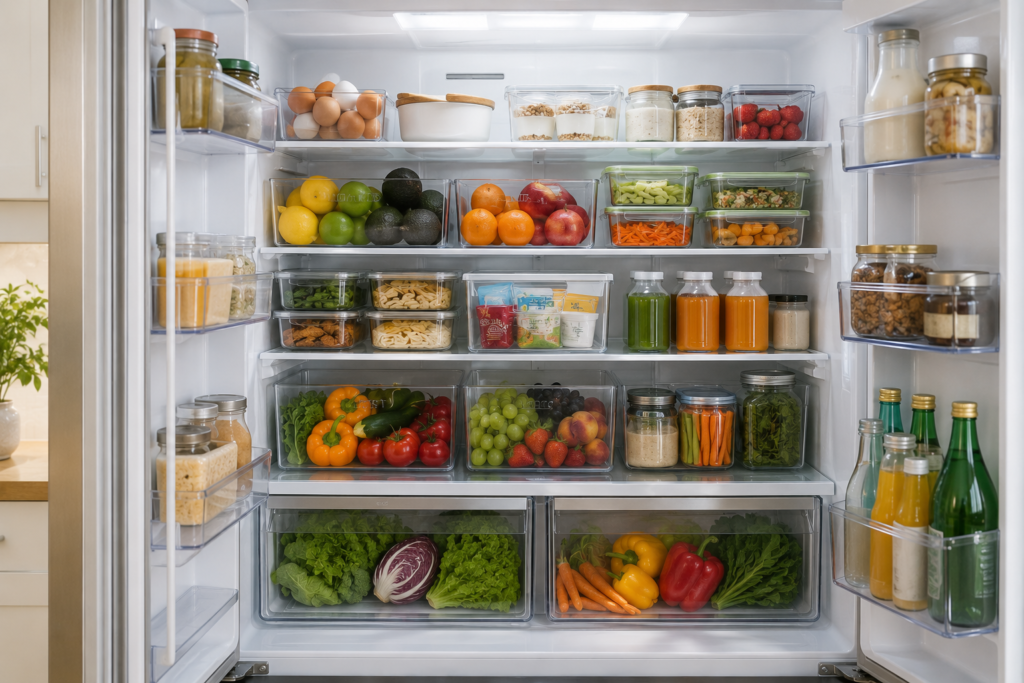
8. Create Refrigerator Zones
An organized refrigerator can make meal planning easier, reduce forgotten food, and help you see what needs to be used before your next grocery trip.
Create simple zones based on the foods your household regularly stores. You might dedicate areas to breakfast foods, snacks, meal-prep ingredients, produce, beverages, leftovers, and items that should be eaten soon.
Clear bins can be helpful, but they aren’t essential. The most important part is giving similar foods a predictable location.
For additional guidance on keeping refrigerated food safe, see the USDA’s food safety guidance.
Make It Work
Create a small Eat First area for leftovers, opened packages, and produce that needs to be used soon. Check this section before deciding what to cook or buying more groceries.
DaSora Tip
Organize your refrigerator around visibility, not perfection. If you can quickly see what you have, you’re less likely to forget about food hiding in the back.
9. Use the Inside of Cabinet Doors
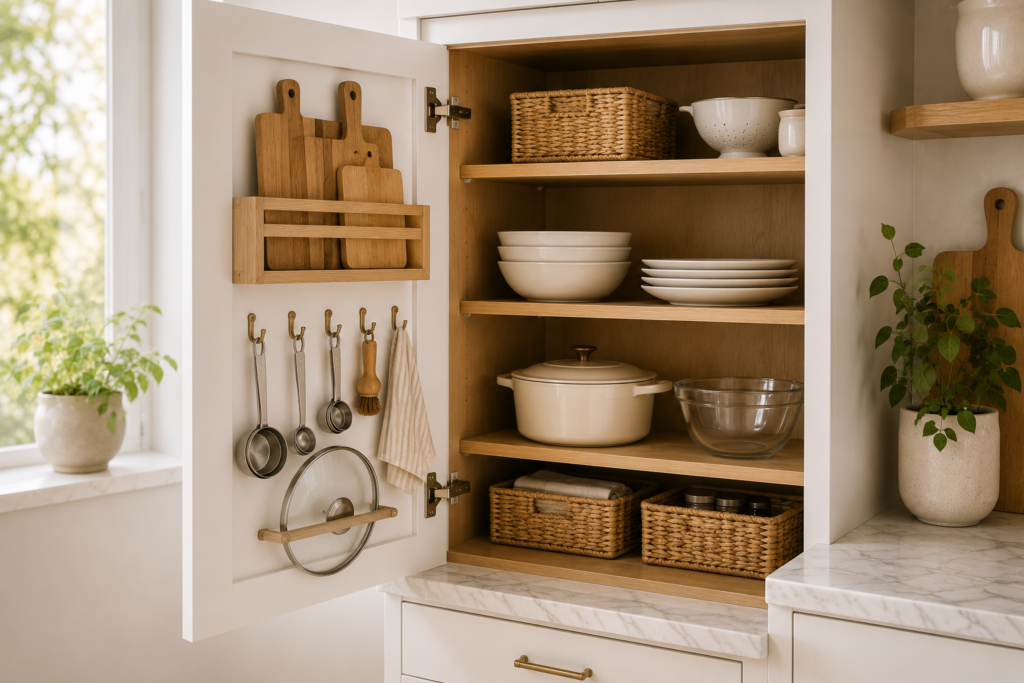
The inside of cabinet doors is often overlooked, but it can provide useful storage without taking up shelf or countertop space.
Depending on the cabinet, you can use this area for lightweight items such as measuring spoons, pot lids, small cutting boards, cleaning gloves, or frequently referenced kitchen notes. Simple adhesive hooks or slim organizers can turn otherwise unused space into practical storage.
The key is keeping the setup lightweight so the cabinet door still opens and closes comfortably.
Make It Work
Before installing anything, close the cabinet and check how much clearance exists between the door and the shelves. Choose organizers that won’t interfere with items stored inside.
DaSora Tip
Use hidden storage for small items that tend to create visible clutter. A few thoughtfully placed hooks can sometimes solve the problem without adding another organizer to your countertop.
10. Build a Simple Baking Station
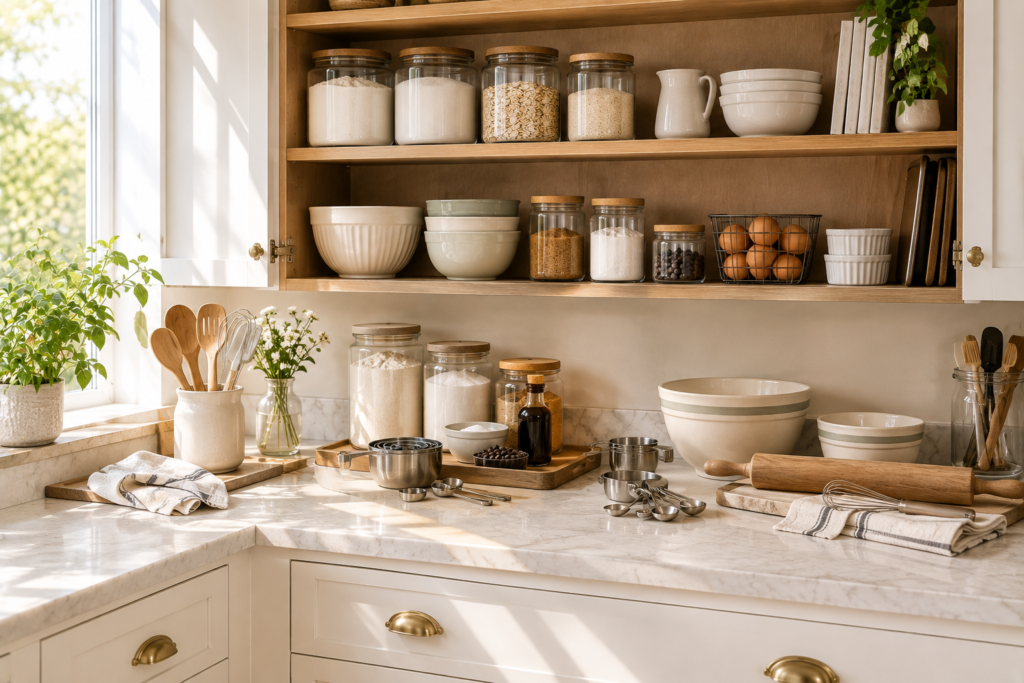
If you bake regularly, keeping your most-used ingredients and tools together can make the entire process easier.
Create a baking zone with essentials such as flour, sugar, measuring cups, measuring spoons, mixing bowls, baking powder, vanilla, and other ingredients you frequently use. It doesn’t need to be an elaborate dedicated cabinet—even one shelf or drawer can work.
Keeping baking essentials together also makes it easier to see when you’re running low on ingredients.
Make It Work
Store frequently used dry ingredients close together and keep measuring tools nearby. Less frequently used decorating supplies or specialty pans can stay in a higher or less accessible cabinet.
DaSora Tip
Build the station around what you actually bake. Someone who makes bread every week needs a very different setup from someone who occasionally makes cookies.
11. Create a Coffee or Beverage Station
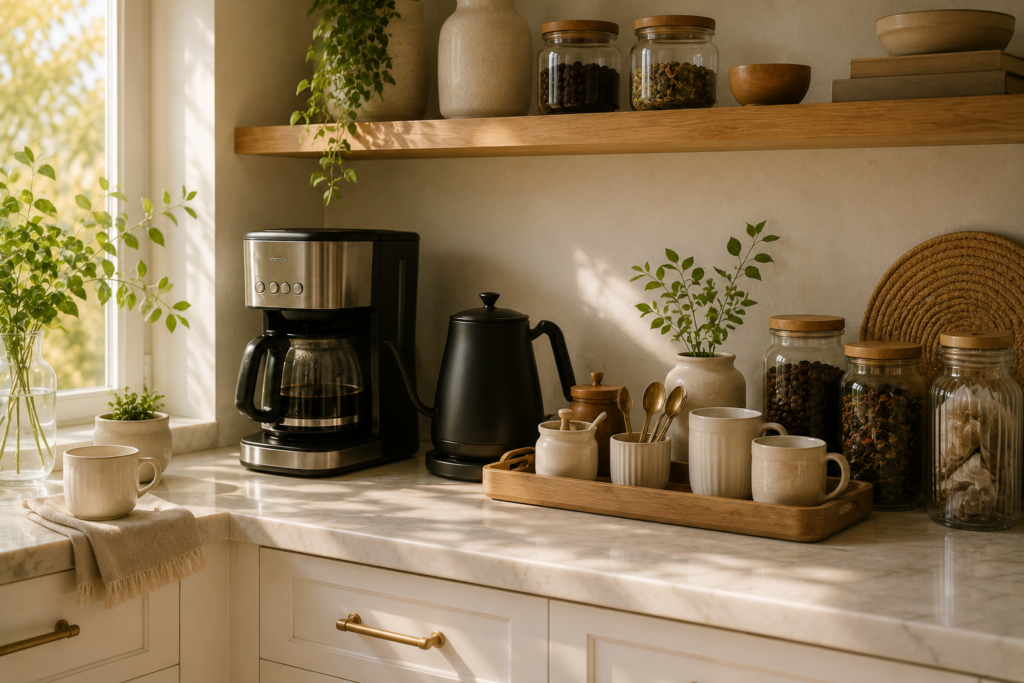
A small beverage station can simplify one of the most repeated routines in the kitchen.
Keep your coffee maker or electric kettle together with the mugs, coffee, tea, sweeteners, and other items you use each morning. When everything is within reach, you can prepare your drink without moving around the kitchen searching for supplies.
A tray can help visually contain smaller items and keep the area looking intentional rather than cluttered.
Make It Work
Choose a location close to an electrical outlet and, if possible, away from your primary food-preparation area. This allows someone to make coffee or tea without interrupting whoever is cooking.
DaSora Tip
A useful beverage station doesn’t need to look like a coffee shop. Keep only your everyday favorites within reach and store extras elsewhere.
12. Start a 10-Minute Weekly Kitchen Reset
Even the best organization system eventually needs a little maintenance.
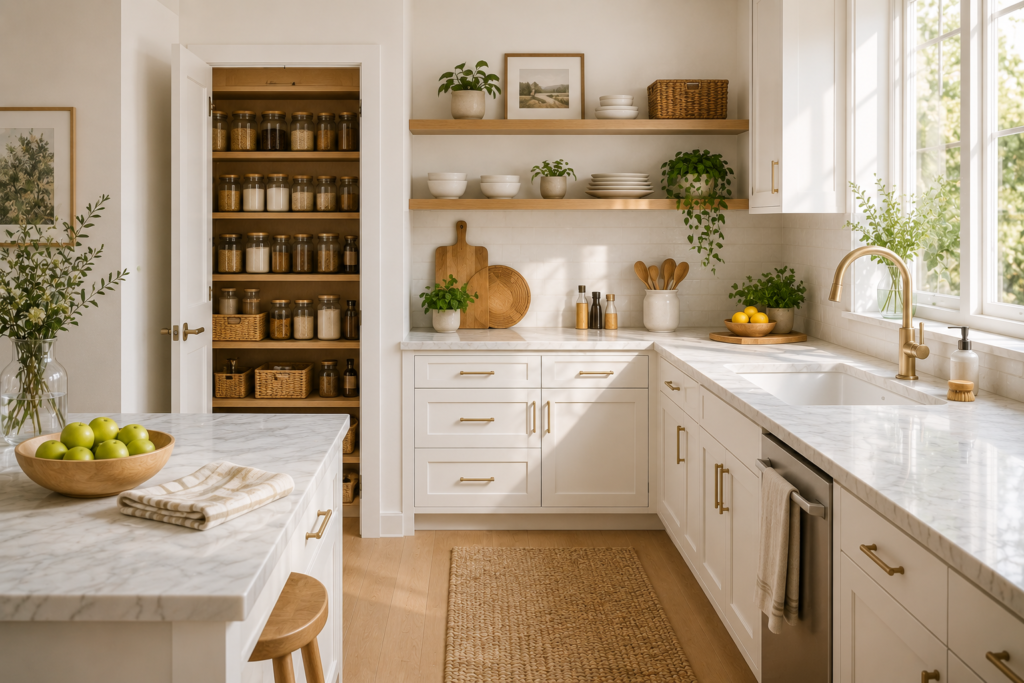
Instead of waiting until the kitchen feels completely disorganized, schedule a simple 10-minute reset once a week. Return misplaced items, clear old food from the refrigerator, straighten pantry shelves, wipe down high-use areas, and check whether anything needs to be restocked.
This small habit can prevent clutter from slowly rebuilding.
Make It Work
Choose a consistent time that naturally fits your routine, such as before grocery shopping or after cleaning up from Sunday dinner.
You don’t need to reorganize everything. Focus only on returning the kitchen to the system you’ve already created.
DaSora Tip
The best organization system isn’t the one that stays perfect. It’s the one that’s easy to reset.
Final Thoughts
A more organized kitchen doesn’t require a complete renovation, expensive storage systems, or perfectly matching containers. The most effective kitchen organization ideas are often the simplest ones—the changes that make everyday cooking, cleaning, and meal preparation easier.
Start with the area that causes you the most frustration. That might be an overflowing utensil drawer, a crowded pantry, cluttered countertops, or a refrigerator where food regularly gets forgotten.
Make one improvement, live with it for a while, and adjust the system around your actual habits.
A beautifully organized kitchen is nice to look at, but a kitchen that genuinely works for you is even better.
Frequently Asked Questions
These kitchen organization ideas can be adapted to large kitchens, small kitchens, and everything in between.
How do I start organizing a messy kitchen?
Start with one small area rather than trying to organize the entire kitchen at once. Remove everything from one drawer, cabinet, or shelf, eliminate items you no longer use, group similar items together, and return only what belongs there.
Completing one manageable space can give you momentum without making the project feel overwhelming.
How can I organize my kitchen without spending a lot of money?
Use what you already own before buying organizers. Repurpose baskets, containers, trays, jars, and small boxes where appropriate.
Decluttering and relocating items often solves more storage problems than purchasing additional organizers.
How do I organize a small kitchen with limited storage?
Prioritize frequently used items and make better use of vertical space. Shelf risers, cabinet-door storage, drawer dividers, stackable containers, and vertical organizers can help increase usable storage without requiring additional cabinets.
Keeping countertops intentionally clear can also make a small kitchen feel more spacious.
Are clear storage containers worth using?
Clear containers can be helpful for frequently used pantry staples because they make quantities easier to see and can reduce clutter from opened packaging.
However, you don’t need to transfer every food item into a container. Use them where they genuinely improve visibility, storage, or convenience.
How do I keep my kitchen organized after I clean it?
Create simple systems that are easy to reset. Give frequently used items predictable locations and spend a few minutes each week returning misplaced items, checking the refrigerator, and straightening high-use areas.
An organization system that takes only a few minutes to maintain is much more likely to last.
Related Reading
If you’re working toward a simpler, more functional kitchen, you may also enjoy:
10 Essential Kitchen Tools We’d Actually Use Every Day
More practical home organization, kitchen inspiration, and smart-living guides are coming soon to DaSora.
About DaSora
At DaSora, we believe smarter living starts with thoughtful choices. We share practical ideas, beautiful home inspiration, useful technology, and carefully researched recommendations designed to make everyday life easier.
Our goal isn’t to fill your home with more things. It’s to help you discover ideas and solutions that genuinely improve the way you live.