Simple Details Can Make a Living Room Feel More Elevated
A beautiful living room doesn’t have to depend on expensive furniture or a complete renovation. Some of the most effective living room decor ideas come from changing how you use color, lighting, texture, scale, and the pieces you already own.
The goal isn’t to make your home look like a showroom. It’s to create a space that feels intentional, comfortable, and visually balanced.
Whether you’re decorating a new living room or refreshing one you’ve had for years, these 15 ideas can help you create a more polished look without changing everything at once.
Quick Take
Want the biggest visual impact first? Start here:
✓ Simplify your color palette
✓ Hang curtains higher and wider
✓ Add more than one source of light
✓ Use fewer, larger decorative pieces
✓ Mix soft, natural textures
Small changes in scale and placement can sometimes make a bigger difference than buying more décor.
Table of Contents
- Start With a Cohesive Color Palette
- Hang Curtains Higher and Wider
- Layer Your Lighting
- Add an Oversized Statement Mirror
- Choose Larger-Scale Wall Art
- Layer Throw Pillows Thoughtfully
- Add a Textured Throw Blanket
- Anchor the Room With the Right Area Rug
- Style Your Coffee Table in Layers
- Use Decorative Trays to Create Order
- Add Greenery With Beautiful Planters
- Mix Materials and Textures
- Incorporate Sculptural Vases and Objects
- Use Baskets as Beautiful Storage
- Edit the Room Instead of Filling Every Space
1. Start With a Cohesive Color Palette
One of the easiest ways to make a living room feel more intentional is to limit the number of competing colors.
You don’t need to make everything beige or neutral. Instead, choose a foundation of two or three main colors and introduce additional shades through smaller accents.
For example, warm cream, natural wood, and muted olive can create a calm foundation while black or brass details add contrast.
Make It Work
Look around the room and identify the colors already present in your largest pieces: sofa, rug, flooring, curtains, and major furniture.
Build your palette around those rather than replacing everything.
DaSora Tip
A coordinated room doesn’t mean everything matches. It means the colors feel like they belong together.
2. Hang Curtains Higher and Wider
Curtain placement can dramatically change how large and polished a room feels.
Instead of positioning the curtain rod directly above the window frame, hanging it higher can visually emphasize the height of the room. Extending the rod beyond the sides of the window also allows curtains to frame the window rather than covering much of the glass.
Make It Work
Use curtains with enough length to reach close to the floor.
When possible, allow the panels to rest mostly outside the window opening when they’re pulled back so natural light can enter freely.
DaSora Tip
Treat curtains as part of the architecture of the room, not simply as something covering a window.
3. Layer Your Lighting
A single ceiling fixture rarely creates the warm, dimensional atmosphere associated with beautifully designed living rooms.
Combine several types of lighting instead.
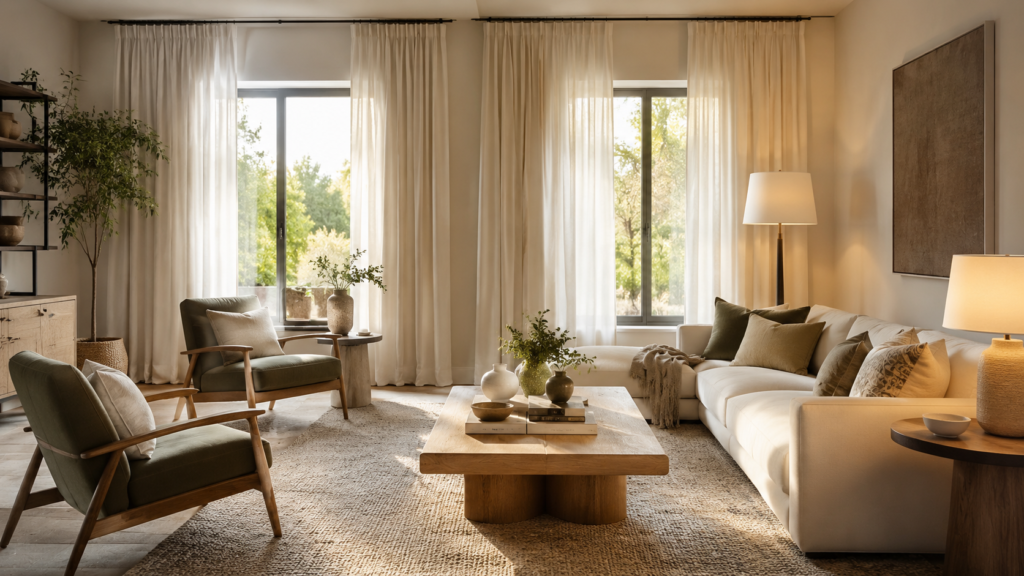
A floor lamp beside a sofa, a table lamp on a side table, and soft ambient lighting can create different pools of light throughout the room.
Make It Work
Think about what happens in different parts of your living room.
Reading areas may need focused lighting, while conversation areas often feel better with softer ambient light.
DaSora Tip
Good lighting isn’t just about brightness. It’s about creating atmosphere at different times of day.
4. Add an Oversized Statement Mirror
A large mirror can act almost like architectural décor.
It reflects light, adds visual depth, and can make a wall feel finished without requiring a collection of smaller decorative pieces.
Arched, round, rectangular, and organically shaped mirrors can all work depending on the style of the room.
Make It Work
Position the mirror where it reflects something attractive—natural light, greenery, artwork, or another thoughtfully styled area.
Avoid placing it where the primary reflection is clutter.
DaSora Tip
Think about what a mirror reflects before deciding where it belongs.
5. Choose Larger-Scale Wall Art
One substantial piece of art can sometimes make a room feel more polished than several small pieces scattered across a large wall.
Scale matters.
Artwork that is too small for the furniture underneath it can make both the artwork and furniture feel visually disconnected.
Make It Work
Use the sofa, console, or cabinet underneath the artwork as a visual reference when choosing its size.
If you prefer a gallery wall, treat the entire arrangement as one larger composition rather than a collection of unrelated frames.
DaSora Tip
When a wall feels unfinished, the problem may be scale rather than the amount of décor.
6. Layer Throw Pillows Thoughtfully
Throw pillows are an easy way to introduce color, texture, and pattern without making a permanent design decision.
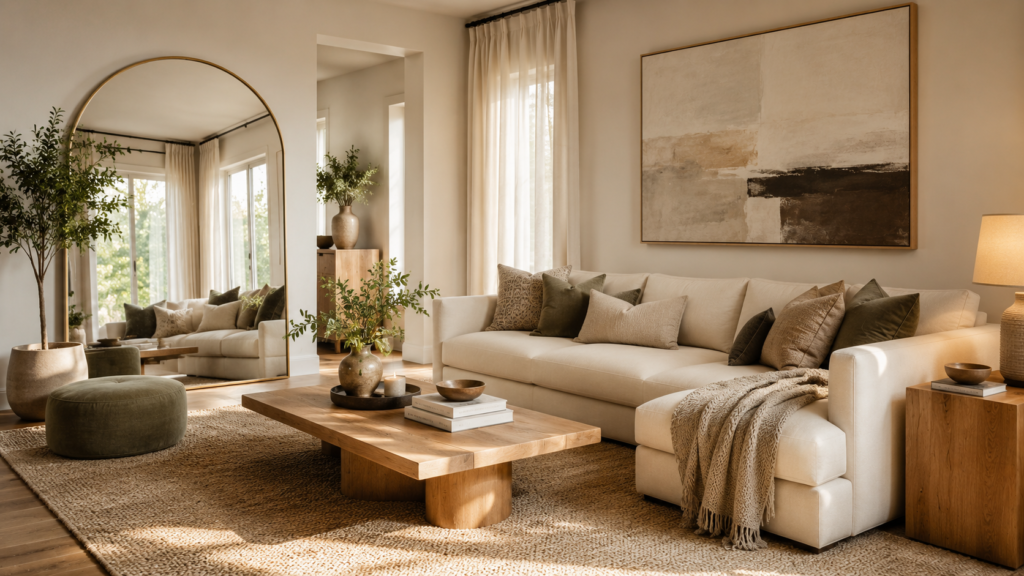
Instead of buying several identical pillows, combine complementary sizes and textures.
A solid linen pillow can work beautifully beside a subtle pattern, velvet accent, or textured woven cover.
Make It Work
Pull colors from the rug, artwork, curtains, or other elements already in the room.
Leave enough open seating space so the sofa still feels comfortable rather than over styled.
DaSora Tip
Pillows should support the room’s color story—not become the entire story.
7. Add a Textured Throw Blanket
A throw blanket can soften the lines of a sofa or chair and introduce another layer of texture.
Chunky knits, linen blends, woven cotton, and other tactile materials can make a room feel warmer and more inviting.
Make It Work
Drape the throw casually over one corner of the sofa or fold it neatly over the arm of a chair.
Choose a texture that contrasts slightly with the upholstery so it doesn’t visually disappear.
DaSora Tip
Texture adds interest even when you’re decorating almost entirely with neutral colors.
8. Anchor the Room With the Right Area Rug
An area rug visually connects furniture and helps define the seating area.
A rug that is too small can make furniture appear disconnected, while a properly scaled rug helps the room feel more cohesive.
Make It Work
When possible, choose a rug large enough for at least the front legs of the primary seating pieces to rest on it.
Consider both size and texture. A beautiful rug still needs to work with your everyday lifestyle.
DaSora Tip
Choose the rug for the room you live in—not only for the photograph you want to take of it.
9. Style Your Coffee Table in Layers
A coffee table can look intentional without being covered in decorative objects.
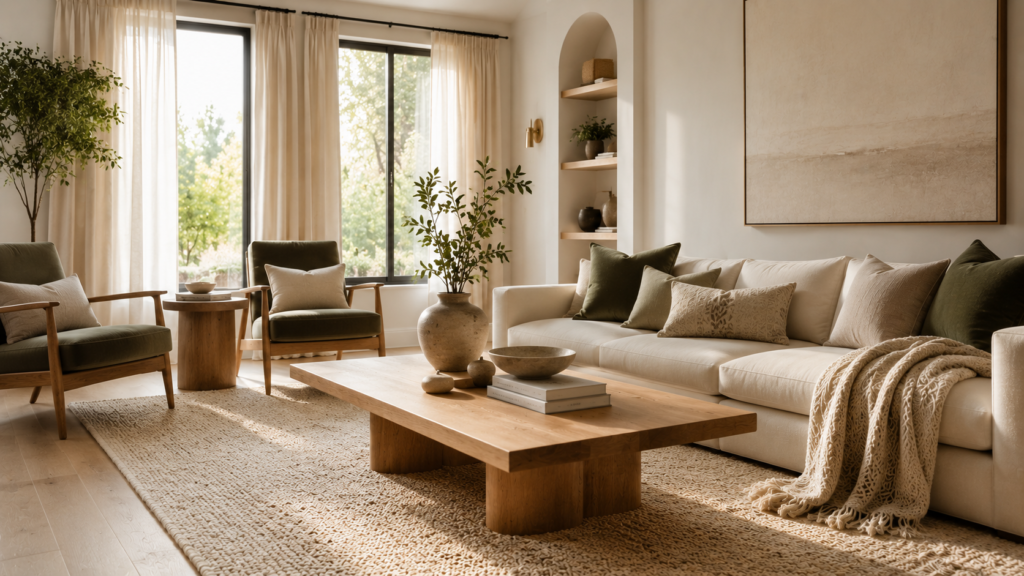
Try combining pieces of different heights and shapes: a small stack of books, a ceramic bowl, a vase with greenery, or one sculptural object.
The goal is balance, not filling every available inch.
Make It Work
Leave open surface area for drinks, snacks, remotes, or anything else you actually use the table for.
Varying height creates visual interest without requiring many objects.
DaSora Tip
A styled coffee table should still function as a coffee table.
10. Use Decorative Trays to Create Order
A tray can make several small objects read visually as one organized grouping.
Use one on a coffee table, console, or side table to contain items such as candles, remotes, coasters, or a small vase.
Make It Work
Choose a tray that complements materials already present in the room.
Wood, stone, woven fibers, metal, and lacquered finishes can all add another subtle layer of texture.
DaSora Tip
Grouping small items often looks more intentional than spreading them across the entire surface.
11. Add Greenery With Beautiful Planters
Plants introduce organic shape and natural color into rooms filled with straight furniture lines and hard surfaces.
The planter matters too. A simple ceramic, stone-look, or woven planter can make greenery feel integrated into the room rather than added as an afterthought.
Make It Work
Choose plants appropriate for the light available in your living room and the amount of maintenance you’re comfortable with.
Vary the height of greenery rather than lining several similar plants along one surface.
For help choosing indoor plants based on your home’s conditions, see the University of Minnesota Extension’s indoor plant guidance.
DaSora Tip
One well-placed larger plant can sometimes have more impact than several tiny ones.
12. Mix Materials and Textures
Rooms often feel more sophisticated when they include a thoughtful mixture of materials.
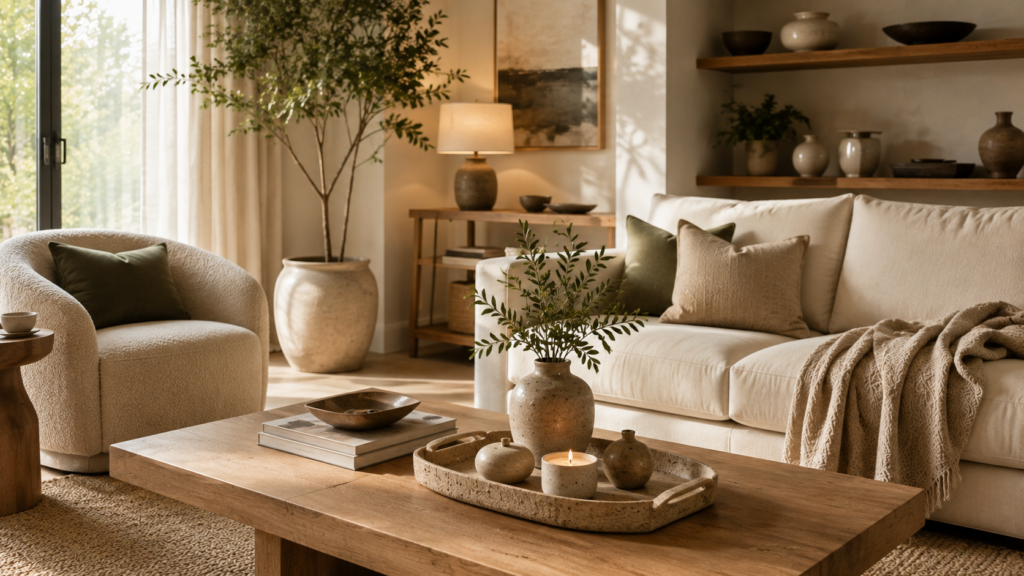
Wood, linen, boucle, glass, metal, stone, woven fibers, and ceramics can create depth even within a restrained color palette.
Make It Work
Look for contrast.
Pair a smooth coffee table with a textured rug, a soft sofa with a wood side table, or a ceramic vase with a glass or metal accent.
DaSora Tip
When your colors are quiet, let texture do more of the decorating.
13. Incorporate Sculptural Vases and Objects
Not every decorative object needs to serve a practical purpose.
A sculptural vase, ceramic bowl, or interesting object can add shape and personality to a shelf, console, or coffee table.
The key is restraint.
Make It Work
Choose a few objects with interesting silhouettes rather than filling every surface with small accessories.
Leave negative space around them so each piece has room to be noticed.
DaSora Tip
Fewer objects with stronger shapes often look more intentional than many small decorations.
14. Use Baskets as Beautiful Storage
Living rooms naturally collect blankets, magazines, toys, remotes, chargers, and other everyday items.
Woven baskets can provide practical storage while adding warmth and texture.
Make It Work
Use larger floor baskets for throws or children’s items and smaller baskets inside shelving or cabinets for loose accessories.
Avoid using baskets simply to hide clutter you no longer need.
DaSora Tip
Beautiful storage works best when it also makes cleanup easier.
15. Edit the Room Instead of Filling Every Space
One of the most overlooked living room decor ideas costs nothing: remove something.
A room can feel more elevated when furniture and decorative pieces have enough space around them.
Not every wall needs artwork. Not every table needs décor. Not every corner needs furniture.
Make It Work
Temporarily remove a few decorative pieces and live with the room for several days.
You may discover that the room feels calmer and that the pieces you kept stand out more.
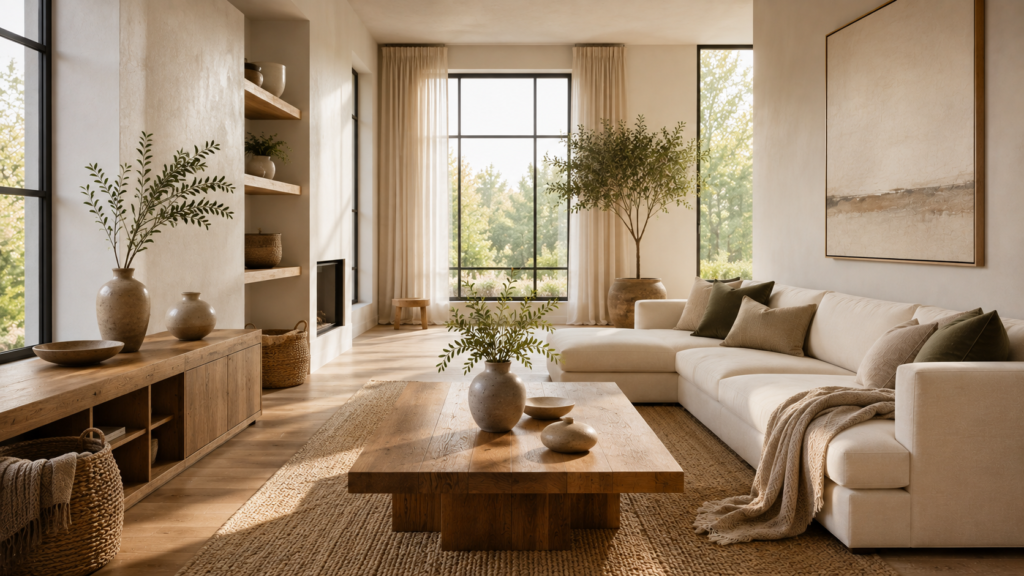
DaSora Tip
Before asking what your room needs, ask whether it already has too much.
Create an Elevated Look Without Redecorating Everything
A more polished living room doesn’t require replacing every piece of furniture.
Start with the elements that have the greatest visual impact: color, curtain placement, lighting, rug scale, artwork, and the amount of visual clutter.
Then add smaller layers through pillows, throws, greenery, trays, baskets, and a few decorative objects.
Most importantly, let the room remain functional.
A living room that looks beautiful but feels uncomfortable to use isn’t truly well designed.
The most successful spaces balance appearance with the way people actually live in them.
Frequently Asked Questions
How can I make my living room look more expensive on a budget?
Focus first on arrangement and scale rather than buying more décor. Simplify the color palette, reposition curtains, reduce clutter, improve lighting, and restyle existing accessories before purchasing additional pieces.
What colors make a living room look more sophisticated?
There isn’t one required palette. Cohesive combinations often work better than simply choosing expensive-looking colors. Warm neutrals, natural wood tones, muted greens, soft blues, charcoal, and carefully used darker accents can all create a polished look.
How many throw pillows should I put on my sofa?
There is no universal number. Use enough to add comfort, texture, and color while leaving plenty of usable seating. The size of the sofa and pillows matters more than following a fixed number.
How do I decorate a living room without making it look cluttered?
Use fewer pieces with more visual impact, group small objects together, maintain some empty surfaces, and give everyday items dedicated storage.
What should I decorate first in a living room?
Start with the largest visual elements: furniture arrangement, color palette, window treatments, lighting, and rug. Smaller decorative accessories are easier to choose once those foundational elements work together.
Final Thoughts
Creating a beautiful living room is less about following every decorating trend and more about making thoughtful decisions.
Pay attention to scale. Layer lighting. Introduce texture. Give meaningful pieces enough space to stand out.
And remember that some of the best living room decor ideas don’t involve buying anything at all.
Sometimes moving a lamp, raising a curtain rod, removing unnecessary accessories, or restyling what you already own can completely change how the room feels.
Create a living room that looks considered—but still feels like home.
Related Reading
Looking for practical ways to create a more organized home?
12 Smart Kitchen Organization Ideas That Make Everyday Life Easier
Creating a dedicated workspace at home?
12 Home Office Essentials for a More Productive Workspace
About DaSora
At DaSora, we believe smarter living starts with thoughtful choices. We share practical ideas, beautiful home inspiration, useful technology, and carefully researched recommendations designed to make everyday life easier.
Our goal isn’t to fill your home with more things. It’s to help you discover ideas and solutions that genuinely improve the way you live.