Create a Nursery That Feels Calm, Comfortable and Practical
Designing a nursery can be one of the most enjoyable parts of preparing a space for a new baby. But a beautiful room doesn’t need to be filled with decorations, furniture, or accessories.
Some of the most effective nursery decor ideas combine a calm color palette, practical storage, comfortable lighting, and thoughtful organization with plenty of open space.
The goal is to create a room that feels welcoming for adults while remaining functional as your baby’s needs change.
These 15 ideas focus on creating a nursery that feels warm, organized, and beautifully considered without becoming overly styled.
Quick Take
If you’re starting from an empty room, prioritize these first:
✓ Keep the crib and sleep space simple
✓ Choose a calm, flexible color palette
✓ Create comfortable lighting for different times of day
✓ Give everyday baby supplies predictable storage
✓ Leave enough open space for the room to evolve
A nursery doesn’t need every available baby product to feel complete.
Table of Contents
- Start With a Calm Color Palette
- Let the Crib Area Feel Simple
- Choose One Beautiful Wall Focal Point
- Add Soft Window Treatments
- Layer the Room With Gentle Lighting
- Anchor the Space With a Soft Area Rug
- Create a Comfortable Feeding Corner
- Organize the Changing Area
- Use Baskets for Everyday Storage
- Add Practical Closed Storage
- Use Wall Storage Selectively
- Add a Full-Length or Decorative Mirror
- Bring in Natural Wood and Texture
- Add Greenery Away From Baby’s Reach
- Leave Room for the Nursery to Grow
1. Start With a Calm Color Palette
A nursery doesn’t have to rely on traditional pink or blue.
Warm white, cream, soft beige, muted sage, dusty blue, warm taupe, and natural wood tones can create a flexible foundation that works with many decorating styles.
Once the foundation is established, smaller accents can introduce additional personality.
Make It Work
Start with the largest visual surfaces: walls, flooring, curtains, rug, and major furniture.
Then repeat one or two accent colors through smaller decorative pieces rather than introducing many unrelated shades.
DaSora Tip
A calm nursery doesn’t have to be colorless. It simply needs colors that work comfortably together.
2. Let the Crib Area Feel Simple
The crib naturally becomes an important visual element in a nursery, but the sleep space itself isn’t the place for decorative layering.
For infant sleep, CPSC advises using a firm, flat sleep surface and keeping the crib bare except for a fitted sheet—without pillows, blankets, padded bumpers, stuffed toys, or other loose items.
That simplicity can actually support a clean nursery aesthetic.
Make It Work
Let the crib’s material, shape, and surrounding wall color contribute to the design instead of adding objects inside it.
Keep cords, lamps, plants, and decorative objects away from the sleep space.
For current infant sleep guidance, see the U.S. Consumer Product Safety Commission’s Safe Sleep guidance.
DaSora Tip
Decorate the nursery around the crib—not inside the baby’s sleep space.
3. Choose One Beautiful Wall Focal Point
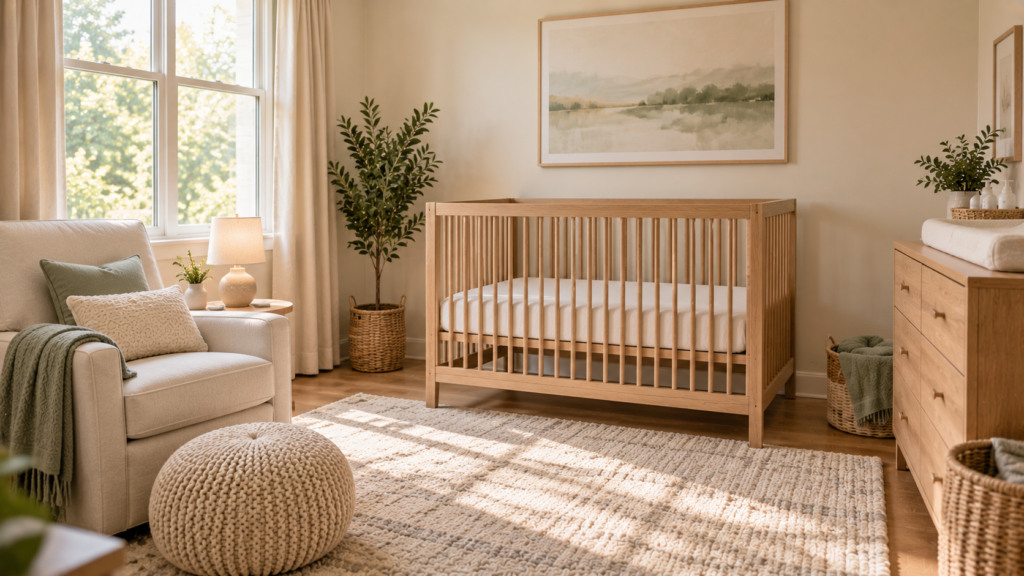
Instead of decorating every nursery wall, create one intentional focal area.
This might be a substantial piece of artwork, a restrained group of coordinating prints, painted detail, or another simple design feature.
Make It Work
Keep decorative items securely positioned and thoughtfully located away from the crib and areas where a growing child could eventually reach them.
Allow some surrounding wall space to remain open.
DaSora Tip
One strong focal point can make a room feel more finished than many small decorations.
4. Add Soft Window Treatments
Curtains can soften a nursery and help control natural light.
Simple full-length panels can visually increase the room’s height while adding texture without introducing additional furniture or accessories.
Make It Work
Choose window treatments based on both appearance and function.
Keep cords and similar hazards inaccessible to children, and make sure curtains and hardware are positioned appropriately for the room.
DaSora Tip
Nursery window treatments should work just as well during nap time as they do in photographs.
5. Layer the Room With Gentle Lighting
Different nursery routines benefit from different levels of light.
Bright natural daylight may work well during the day, while a softer lamp can make nighttime feeding or changing more comfortable.
Make It Work
Combine general room lighting with one or two softer task-lighting sources.
Position lamps and electrical cords where they cannot be reached from the crib or other child-accessible areas.
DaSora Tip
A nursery doesn’t need to be brightly lit all the time. Give yourself lighting options.
6. Anchor the Space With a Soft Area Rug
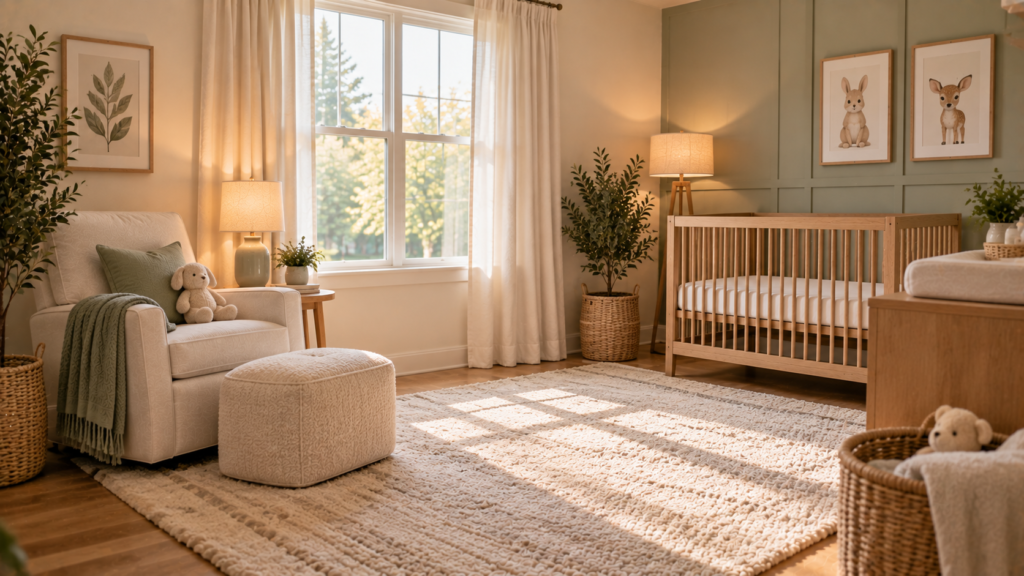
An area rug can introduce warmth, softness, and texture while visually connecting the major pieces of furniture.
It can be particularly useful in rooms with hard flooring.
Make It Work
Choose a size appropriate for the room rather than automatically selecting a very small rug.
Consider durability and ease of cleaning along with appearance.
DaSora Tip
A nursery rug should be comfortable enough for everyday life—not simply attractive enough for the room.
7. Create a Comfortable Feeding Corner
A dedicated chair can create a comfortable place for feeding, soothing, reading, or simply sitting with your baby.
Pair it with a compact side table for items an adult may need while seated.
Make It Work
Choose the chair for comfort and support rather than appearance alone.
Position the chair and side table so they don’t crowd the crib or main walking path.
DaSora Tip
The prettiest chair isn’t necessarily the one you’ll appreciate during a long night.
8. Organize the Changing Area
A changing dresser can provide both a practical work surface and valuable closed storage.
Keep frequently needed supplies organized so they are easy for an adult to access without turning the top of the dresser into a crowded display.
Make It Work
Use drawers or internal organizers to group similar supplies together.
Keep only essential everyday items on the surface and follow appropriate safety practices for the changing setup you use.
DaSora Tip
A changing area works best when organization reduces the number of things competing for your attention.
9. Use Baskets for Everyday Storage
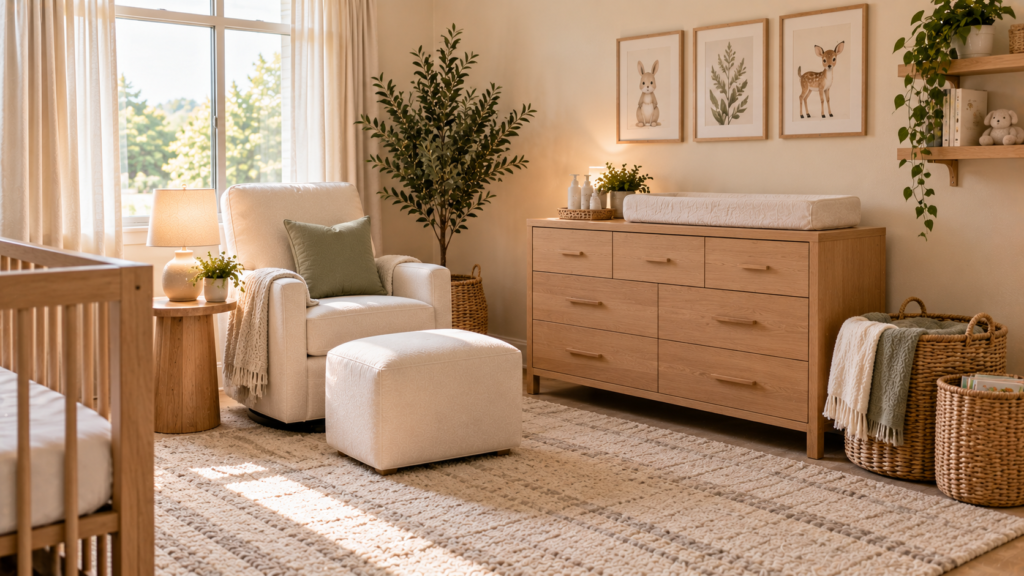
Baskets can provide attractive storage for items such as blankets, toys, books, or laundry while introducing natural texture.
Woven fibers also pair especially well with neutral nursery palettes.
Make It Work
Use baskets where they make cleanup easier rather than simply adding them as decoration.
As your baby becomes mobile, reassess what is stored within reach.
DaSora Tip
Storage should evolve as quickly as your baby’s ability to explore the room.
10. Add Practical Closed Storage
Not every baby item needs to remain visible.
Drawers, cabinets, wardrobes, and other closed storage can help reduce visual clutter while keeping extra supplies organized.
Make It Work
Reserve easily accessible storage for the items you use most frequently.
Group similar items together so restocking and finding supplies becomes easier.
DaSora Tip
Closed storage can make a nursery feel calmer without requiring you to own fewer practical supplies.
11. Use Wall Storage Selectively
Wall storage can free floor space, particularly in smaller nurseries.
But shelves don’t need to cover every available wall.
A small amount of well-positioned storage can provide space for books or adult-accessed items while keeping the room visually open.
Make It Work
Use secure installation appropriate for the wall and keep shelving thoughtfully positioned away from the crib and children’s reach.
Avoid overcrowding shelves with decorative objects.
DaSora Tip
Use vertical space because it solves a storage problem—not simply because the wall is empty.
12. Add a Full-Length or Decorative Mirror
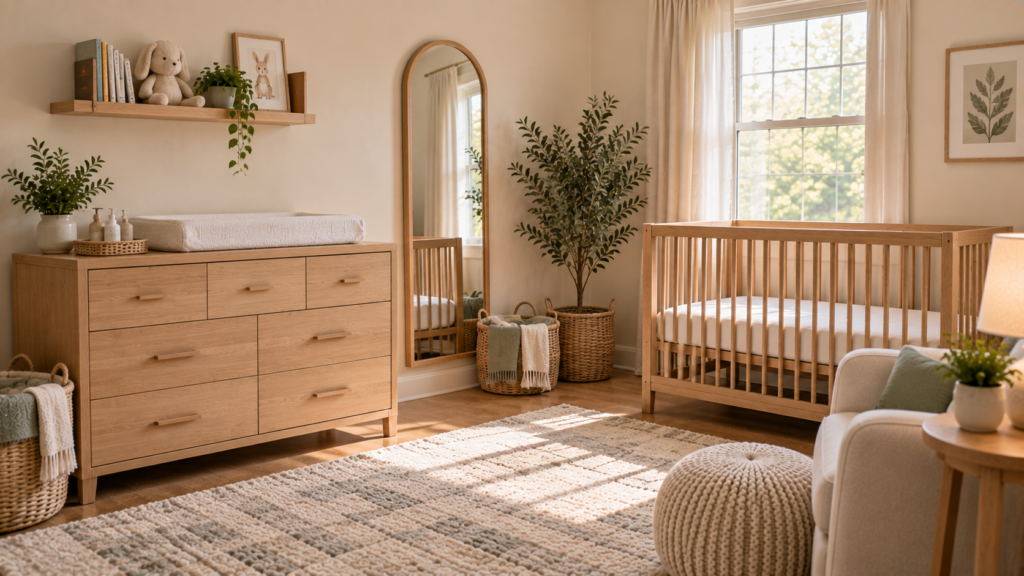
A mirror can reflect natural light and visually expand a smaller nursery.
Simple wood, warm metal, or neutral frames can complement the room without becoming overly decorative.
Make It Work
Position and secure mirrors appropriately, particularly as your child becomes mobile.
Consider what the mirror reflects; natural light or an attractive part of the room usually creates a better effect than storage clutter.
DaSora Tip
A mirror can be both practical and decorative when its placement is thoughtful.
13. Bring in Natural Wood and Texture
Natural materials can add warmth to a nursery without relying on strong colors.
Warm oak, woven baskets, linen curtains, soft upholstery, textured rugs, and ceramic accents can create visual depth within a restrained palette.
Make It Work
Repeat a few materials throughout the room instead of introducing a different finish on every surface.
The room will usually feel more cohesive when textures relate to one another.
DaSora Tip
When the color palette is quiet, texture can do more of the decorating.
14. Add Greenery Away From Baby’s Reach
A little greenery can introduce natural color and organic shape.
If you choose a live plant, consider the room’s light conditions, maintenance requirements, and whether the plant is appropriate for your household.
Make It Work
Place greenery securely away from the crib, changing area, and anywhere a baby or toddler could eventually reach it.
One thoughtfully positioned plant is often enough.
DaSora Tip
Plan nursery décor for the crawling toddler who will eventually explore it—not only for the newborn who won’t.
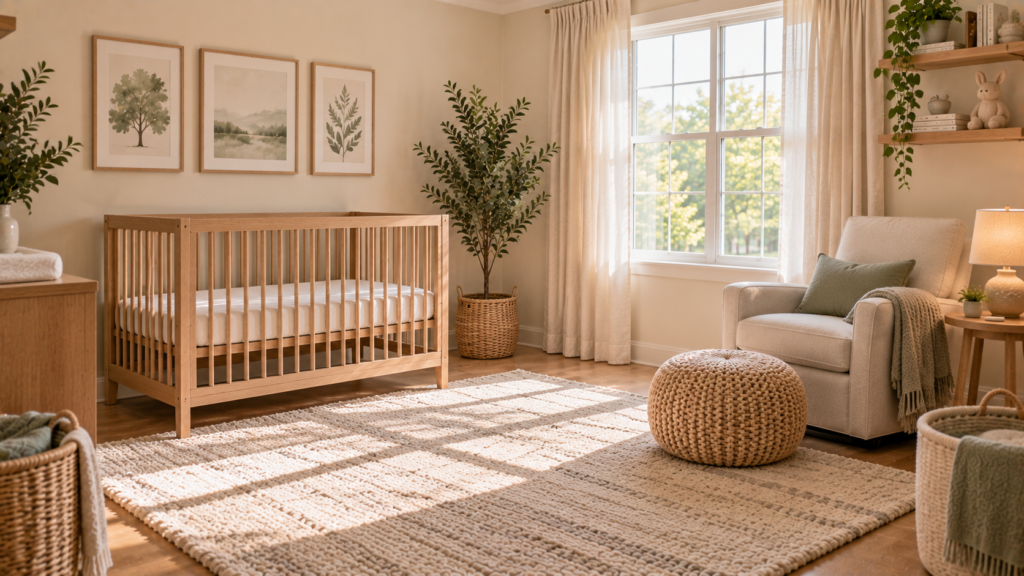
15. Leave Room for the Nursery to Grow
Your baby’s needs will change quickly.
A nursery designed only for the newborn stage may require constant rearranging as storage needs, mobility, play, and routines change.
Leaving some open floor and wall space gives the room flexibility.
Make It Work
Avoid filling every corner before you know how you’ll actually use the nursery.
Add storage and furniture gradually when a real need appears.
DaSora Tip
The most useful nursery is one that can change along with the child who lives there.
Create a Nursery That Works Beyond the First Few Months
A beautiful nursery isn’t defined by how many decorative pieces it contains.
Start with a practical layout, comfortable furniture, thoughtful lighting, useful storage, and an intentionally simple sleep area.
Then add personality through color, artwork, texture, baskets, rugs, and a few carefully selected decorative details.
As your baby grows, continue evaluating the room from a new perspective.
Objects that were once safely out of reach may eventually become accessible. Storage needs will change. Open floor space may become increasingly valuable.
A nursery that can adapt will usually serve your family better than one designed around a single photograph.
Frequently Asked Questions
What should I decorate first in a nursery?
Start with the room’s layout and major functional pieces, then choose a simple color palette. Once the crib, feeding area, changing area, storage, and lighting are planned, smaller decorative choices become much easier.
How can I make a small nursery feel bigger?
Use a restrained palette, avoid oversized furniture, take advantage of appropriate closed or vertical storage, keep some wall and floor space open, and use mirrors strategically to reflect light.
What should go inside a baby’s crib?
For infant sleep, CPSC’s guidance is to keep the sleep space bare, using a firm, flat surface with only a fitted sheet and no pillows, blankets, padded bumpers, stuffed toys, or other loose items.
How can I make a nursery feel cozy without adding clutter?
Use texture through a rug, curtains, upholstery, baskets, and natural wood. Warm layered lighting and a restrained color palette can also create coziness without filling surfaces with decorative objects.
How can nursery decor grow with my child?
Choose flexible furniture and a color palette that isn’t dependent on one short-lived theme. Keep some storage and floor space available so the room can adapt as toys, books, clothing, and daily routines change.
Final Thoughts
The best nursery decor ideas balance beauty with everyday function.
A calm palette, warm lighting, comfortable seating, practical storage, natural textures, and a few meaningful decorative details can create a room that feels welcoming without becoming crowded.
Keep the sleep space intentionally simple, and allow the rest of the room to carry the decorative personality.
Most importantly, design with change in mind.
The peaceful newborn nursery you create today will eventually become a space for a curious, mobile child.
A room that can grow along with them can remain beautiful and useful far beyond the first few months.
Related Reading
Looking for more ideas for creating a beautiful, comfortable space?
15 Living Room Decor Ideas to Make Your Home Look More Expensive
Working with a compact room?
15 Dorm Room Decor Ideas to Make a Small Space Feel Like Home
About DaSora
At DaSora, we believe smarter living starts with thoughtful choices. We share practical ideas, beautiful home inspiration, useful technology, and carefully researched recommendations designed to make everyday life easier.
Our goal isn’t to fill your home with more things. It’s to help you discover ideas and solutions that genuinely improve the way you live.